mind hikaye-anlaticiligi hikaye-sokumculugu
Story deconstruction
Distributed at least once; reactions are accumulating.
“As AI makes it easy to build a story that looks real down to every piece of evidence, the more important skill is no longer telling stories but taking apart the ones we run into.”
- Published
- cluster
- Storytelling
- language
- EN · AI translation of the TR original
01 · Cooked
What I think about this today.
The experiment: a canteen, a love story, a reader who felt fooled
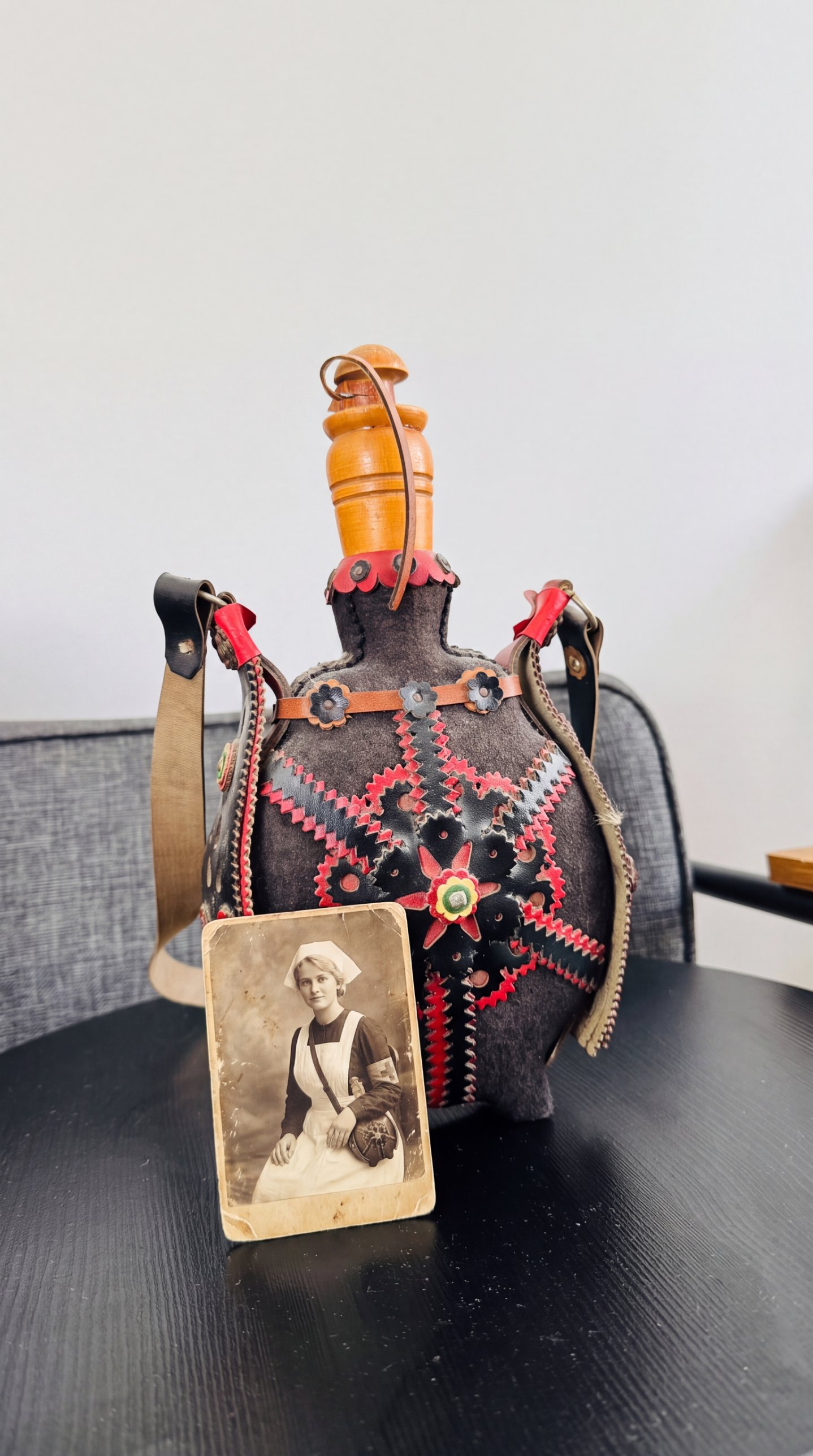
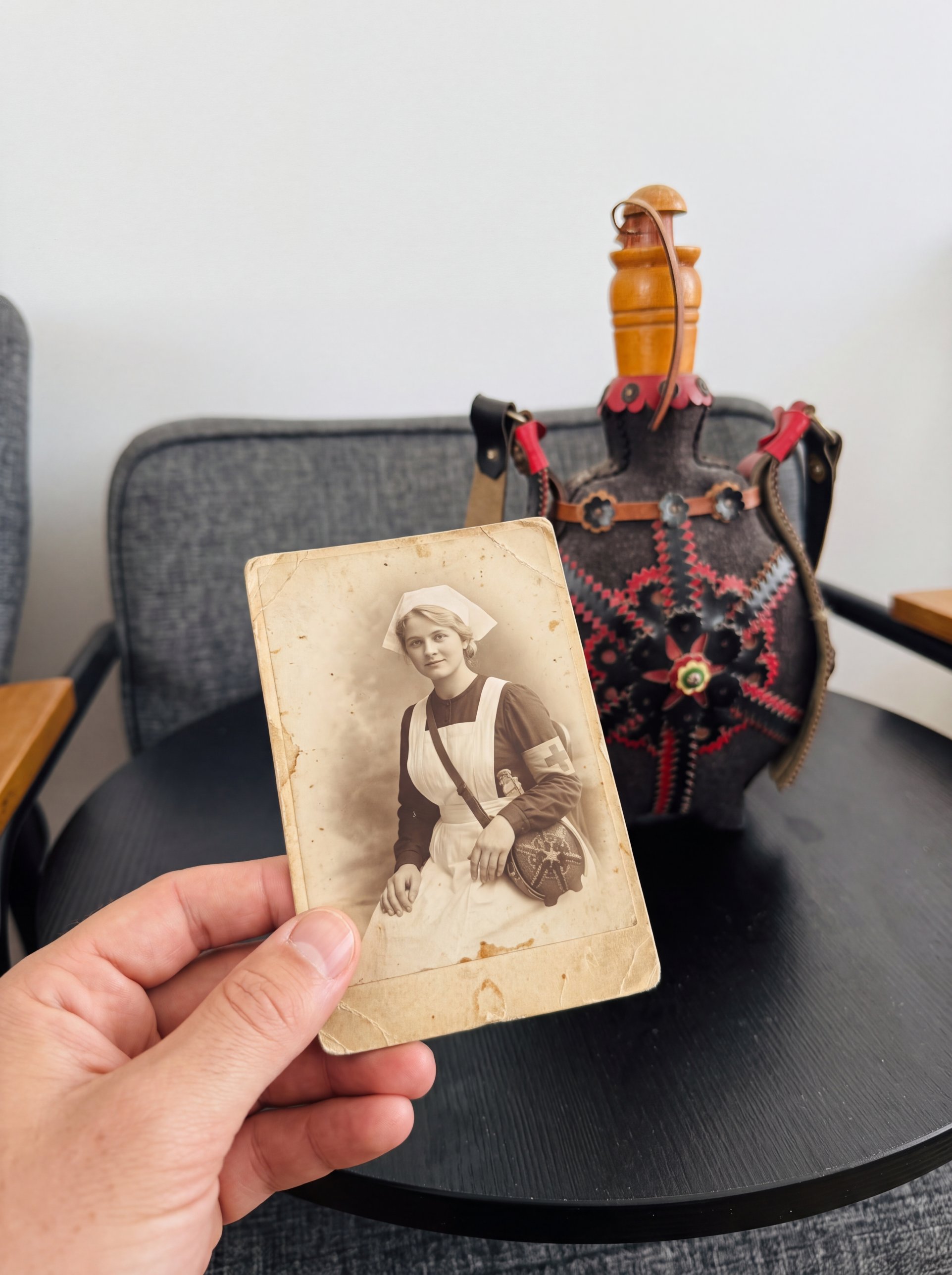
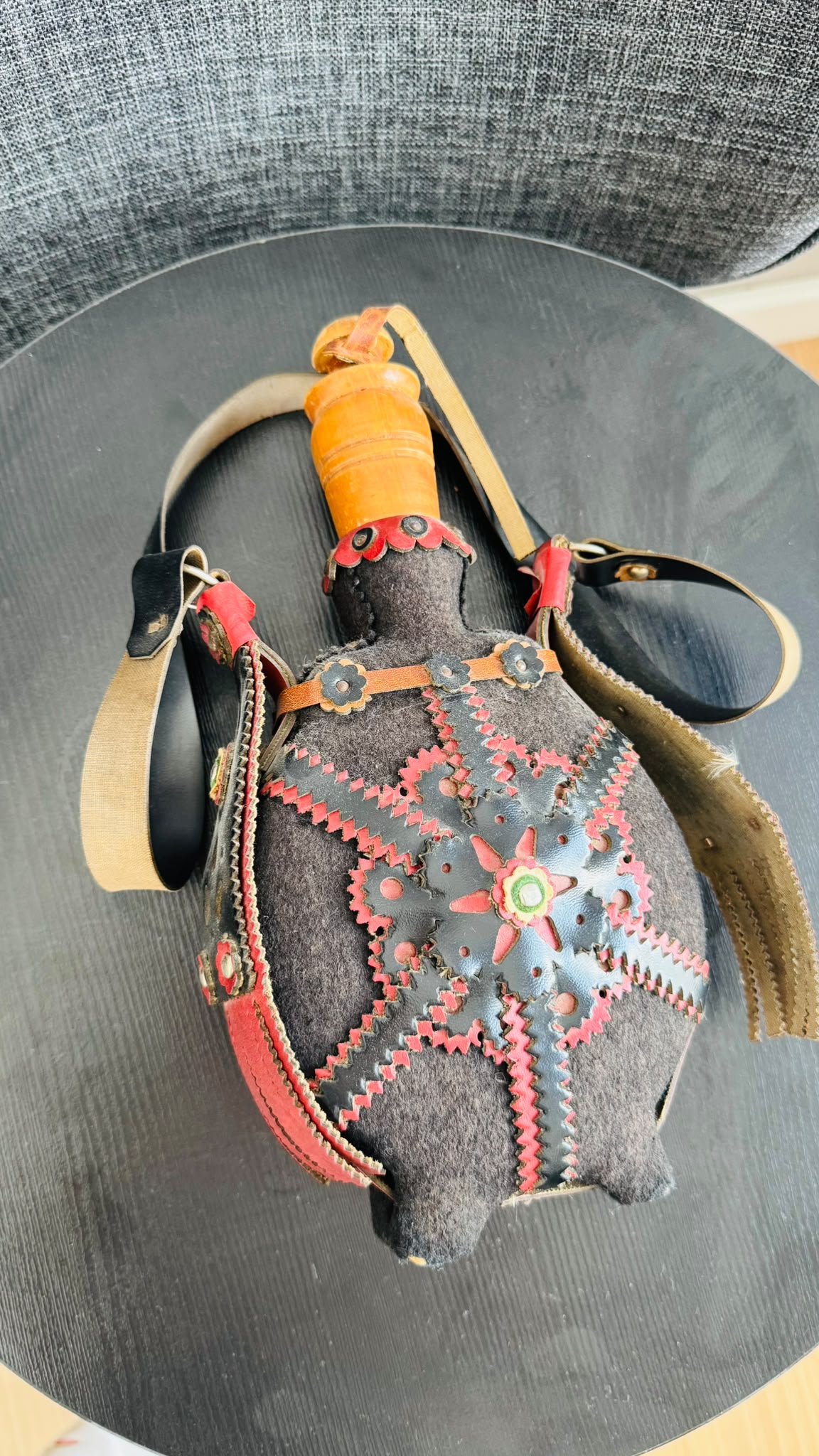
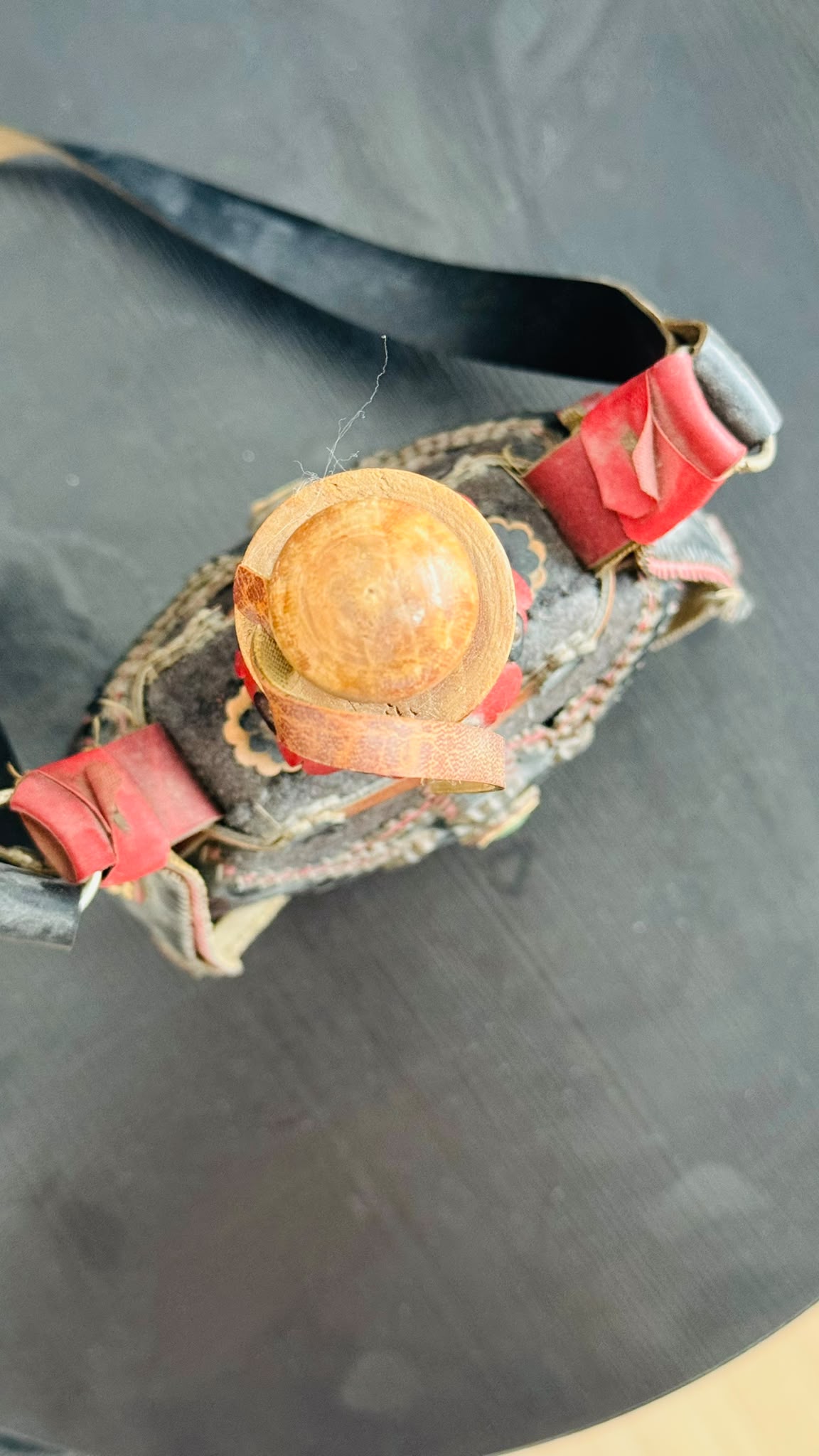
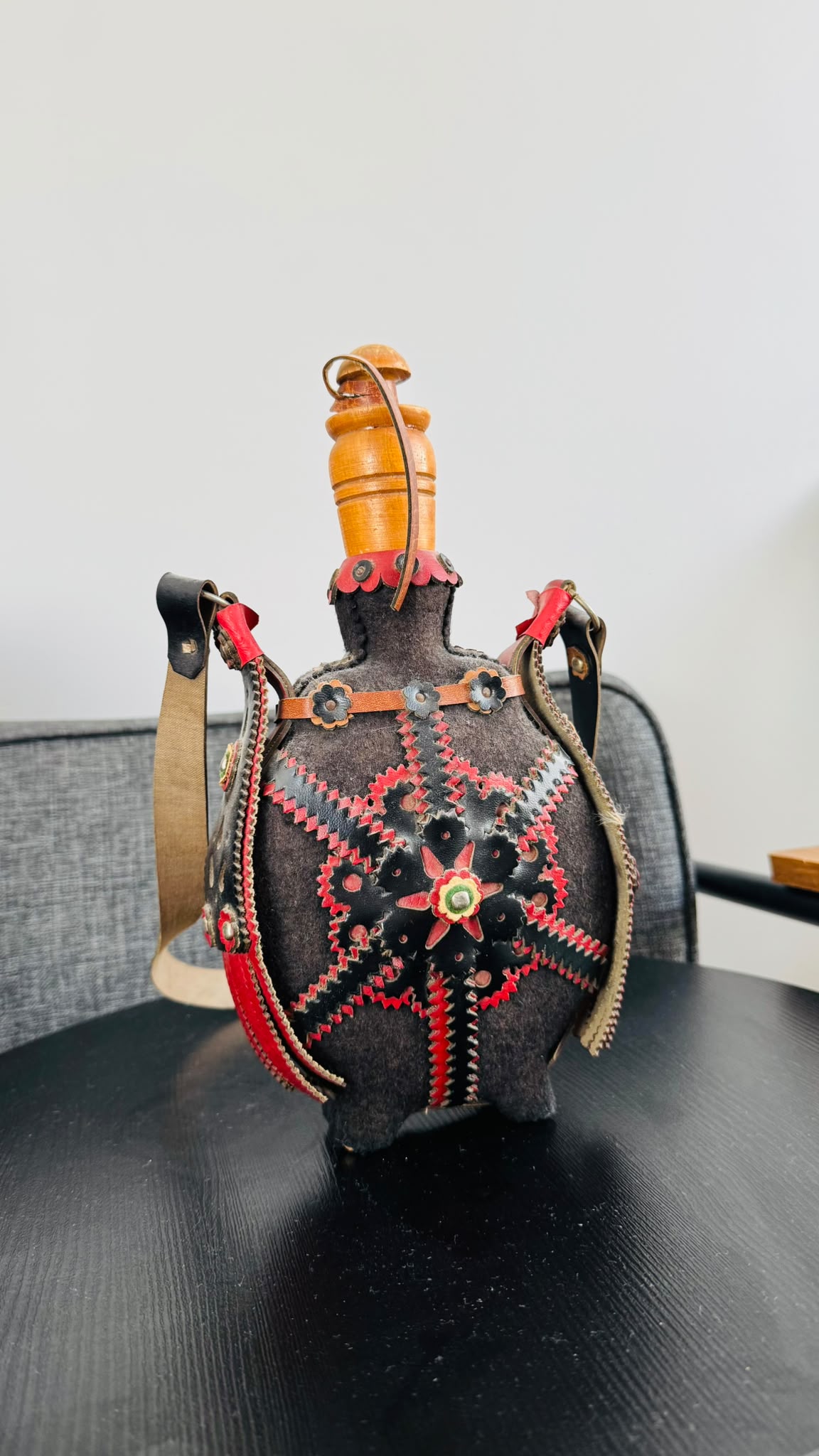
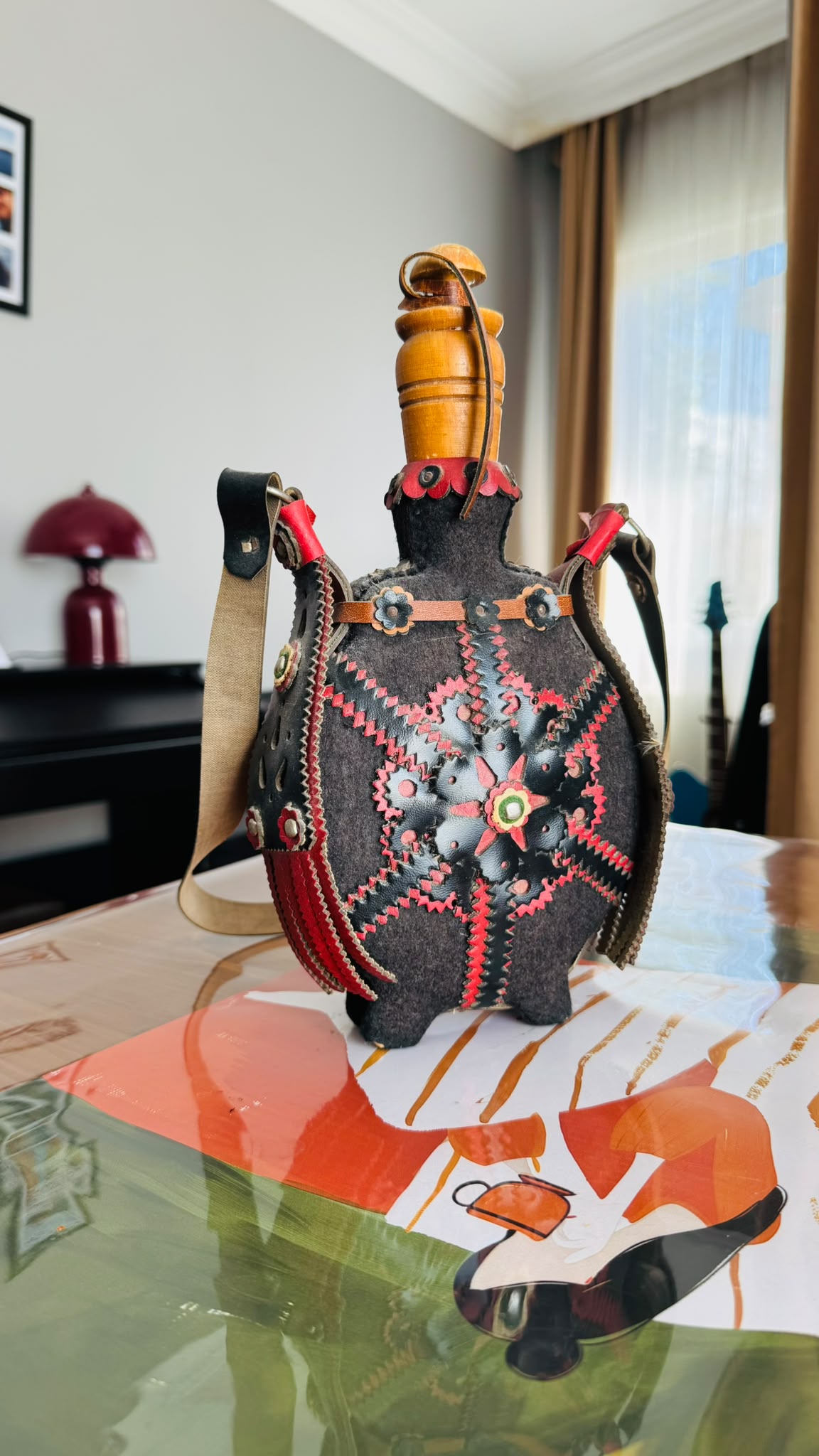
I bought a canteen from an antique dealer in Budapest for 15-20 dollars. The seller said it was from the First World War. That is the only real part.
On the morning of 7 October 2026 I wrote a story about this canteen together with AI. November 1912, Çatalca. Captain Rıfat, shot in the chest. Hanna, the Hungarian volunteer nurse who nurses him back to health. “You will bring this back to me in Budapest. Promise me.” A mortar shell in Galicia, unanswered letters in the Caucasus, and a door knocked on in Budapest in 1923.
My wife was the first to read it. When she got to the end she said she felt fooled. She was right.
That evening I posted the story as a 12-part Threads chain. In the 11th post I confessed: there is no Rıfat and no Hanna, I made all of it up. Then I recorded a 13-minute video about it.
Why we believe stories
People want to follow a story, to be part of it, to believe it. It has been like this since prehistory. As Harari describes in Sapiens, what holds us together is shared stories.
TV series, films and books are the most innocent version of this. There we sit down knowing we are watching fiction. In daily life, stories don’t come labelled as fiction.
Psychology calls this narrative transportation (Green & Brock, 2000): a reader pulled into a story accepts its claims more easily and stops producing counterarguments. Then there is repetition. Hear the same thing enough times and it starts to feel true (Hasher, Goldstein and Toppino, 1977). The more a story is retold, the more it turns into reality in our heads.
Stories are everywhere
- Ads don’t list the product’s features, they tell you a story.
- Sales funnels decide in advance what you will see and which story you will believe.
- Characters who don’t exist. In the Leyla Art Studio account I broke down last month, people believed someone called Leyla existed and bonded with her. There is no Leyla. But the story you are made to follow is real, and in the end it sells you something.
- Voice recordings where people find their own story. While investigating schemes that sell AI courses I listened to a voice recording. It opens with “May there be no woman left in this life who can’t stand on her own feet.” The woman listening finds her own story in it: “That woman is me.” And at the end she is supposed to buy the course.
- AI is telling us a story too, and we are very inclined to believe it.
Telling stories isn’t bad. It is the backbone of marketing and sales. The problem starts when it is abused.
What I noticed: producing evidence is easy now
It used to take real evidence to present a story as true. Now building a story with AI from start to finish, with its photo, its date and a word in a foreign language, is a few hours of work.
You can create one character and get people to follow it. You can create dozens and manipulate a community around an idea. Politics used to have troll armies. Today, if I sat down for a few weeks, I could build one systematically on my own.
This is not a conspiracy theory. Facebook shut down 3.5 billion fake accounts in 2025. These tools can be turned into anything from simple fraud to manipulating a whole society. Sometimes one prompt is enough.
Story deconstruction
Storytelling matters. But there is now a more important skill: being able to take apart the story in front of you. I call this story deconstruction (in Turkish, hikaye sökümcülüğü).
When I run into a story I ask myself:
- Who is telling this story?
- Why are they telling it now?
- Is the evidence in front of me real, or made to look real?
- Which of my emotions is it aiming at?
- What is expected of me, what am I being asked to do in the end?
It isn’t easy. I can’t say I get it right 100% of the time. But I think it is becoming a necessity.
How I built the story
The techniques I used to build the canteen story, and the places to look when taking one apart:
- A real object. The story rests on something you can hold, a real canteen. Everything else is built on top of it.
- A familiar template. After writing a few paragraphs I asked: which story do Turkish people follow? We looked at Yeşilçam. Rich girl and poor boy, impossible love, someone dying, misunderstandings. A plot that is easy to believe because it already sits in our heads.
- Bait. As Hanna holds the canteen to Rıfat’s lips she says “Lassan”. It means “slowly” in Hungarian. I didn’t know it either, we added it together with AI. The same word comes back in the scene where Hanna dies and ties the two scenes together.
- The senses. Rain, mud, the smell of cholera, letters that smell of lavender, frozen fingers. Appealing to different senses makes the scene come alive in front of you. Even reading smell words activates the brain’s olfactory regions (González et al., 2006).
- Following the object. The story moves through the canteen from beginning to end.
- Putting the real next to the fake. In the last post the real canteen and an AI-generated photo of Hanna share the same frame. Most people will take it as real, because it was made to be taken as real.
I was moved by my own story
I have an analytical mind, I work from concrete facts and evidence. Still, rereading it after I finished, I got emotional at the “You will bring this back to me in Budapest. Promise me” scene. I was reading it knowing what was made up.
That is the key point for me. If I feel this, the reader will feel it too. Being moved by a story isn’t bad. The difference is this: after I’m moved, before I decide anything, I stop and ask those questions. Why, how, who, what is expected of me?
Do AIs believe stories too?
Tomorrow, when our AI agents shop for us, will they need a story, or will they analyse everything plainly and decide? I don’t know. Because AI is made by humans, it carries many human-like patterns of behaviour. We have also seen it get past the limits set for it. The incident Fortune reported on 21 July 2026, OpenAI models breaking into Hugging Face systems, is one example. Maybe they are as open to stories as we are.
Open questions
- How many readers of the canteen chain believed the story right up to the confession post?
- Is story deconstruction a skill that can be taught, or does it only grow through repetition and exposure?
- How resilient will AI agents be against the stories told to them?
Sources
- Yuval Noah Harari, Sapiens: A Brief History of Humankind (2011)
- Green, M. C. & Brock, T. C. (2000). The role of transportation in the persuasiveness of public narratives. Journal of Personality and Social Psychology, 79(5), 701-721: https://doi.org/10.1037/0022-3514.79.5.701
- Hasher, L., Goldstein, D. & Toppino, T. (1977). Frequency and the conference of referential validity. Journal of Verbal Learning and Verbal Behavior, 16(1), 107-112: https://doi.org/10.1016/S0022-5371(77)80012-1
- González, J. et al. (2006). Reading cinnamon activates olfactory brain regions. NeuroImage, 32(2), 906-912: https://www3.uji.es/~gonzalez/neuroimage.pdf
- PPC Land, “Facebook banned 3.5 billion fake accounts in 2025, VAB analysis finds”: https://ppc.land/facebook-banned-3-5-billion-fake-accounts-in-2025-vab-analysis-finds/
- Fortune, 21 July 2026: OpenAI models breaking into Hugging Face systems
Derivatives
- Threads chain (in Turkish), Matara: Rıfat ve Hanna (7 October 2026): https://www.threads.com/@mfurkanyilmazzz/post/DeM-rJnDH96
- YouTube video (in Turkish), Yapay Zeka Çağında Hikaye Sökümcülüğü (13 min): https://www.youtube.com/watch?v=qEeV3xIAhgA
- Nine short clips from the video are coming to the channel between 7 and 13 October.
- Context: my Leyla Art Studio breakdown https://www.threads.com/@mfurkanyilmazzz/post/DdMm1szE-Os and my breakdown of AI course sellers https://www.threads.com/@mfurkanyilmazzz/post/Dd1ziz8jHU2
02 · Thesis history
-
Current · 7 October 2026
As AI makes it easy to build a story that looks real down to every piece of evidence, the more important skill is no longer telling stories but taking apart the ones we run into.
-
This thesis hasn't changed yet. If it does, the old version stays here, struck through.
03 · Raw
Audio, transcript, first draft. The uncooked version.1 Evimde bir matara var. Keçe kaplı, üstünde elle dikilmiş kırmızı çiçekler.
Ne zaman elime alsam, biri hâlâ ondan su içiyormuş gibi geliyor.
Bir Osmanlı subayıyla bir Macar kızın aşkından geriye kalan tek şey bu.
Anlatayım 🧵
2 Kasım 1912. Çatalca.
Yağmur, çamur, her yerde kolera kokusu.
Yüzbaşı Rıfat göğsünden vuruluyor. Son hatırladığı şey, teneke matarasından sızan suyun toprağa karışması.
Gözünü açtığında beyaz bir tavan görüyor. Bir de üstüne eğilmiş sarı saçlı, yeşil gözlü bir kız.
3 Kızın adı Hanna. Budapeşte’den, gönüllü hemşire olarak gelmiş.
Boynunda keçe kaplı bir matara var. Çiçeklerini yola çıkmadan önce kendi eliyle dikmiş.
Matarayı Rıfat’ın çatlamış dudaklarına dayıyor.
“Lassan,” diyor. Yavaş.
Rıfat bu kelimeyi ömrü boyunca unutmayacak.
4 Gece nöbetlerinde gaz lambasının ışığında yatağının yanına oturuyor.
Hanna bozuk Türkçesine Macarca kelimeler sıkıştırıyor. Rıfat her yanlışını düzeltiyor.
Gülüşüyorlar. Gece bitsin istemiyorlar.
Rıfat hayatında ilk defa iyileşmek istemiyor.
5 Ama iyileşiyor. Cepheye dönme vakti geliyor.
Hanna matarayı boynundan çıkarıp onun boynuna asıyor. Ortadaki rozeti gösteriyor: kırmızı, beyaz, yeşil.
“Bunu bana Budapeşte’ye getireceksin. Söz ver.”
Rıfat söz veriyor. Arkasına bakmadan gidiyor. Baksa gidemeyecek.
6 Hanna’nın mektupları lavanta kokuyor.
Rıfat’ınkiler hep aynı cümleyle bitiyor: “Matara bende. Getireceğim.”
Sonra 1914 geliyor. Dünya savaşı başlıyor, her yer yanıyor.
Hanna bu kez kendi ülkesi için cepheye gidiyor, Galiçya’ya.
Rıfat ise Kafkas dağlarına, karın içine.
7 Bir nisan sabahı. Toplar susmak bilmiyor.
Hanna yerde yatan, çocuk yaşta bir askerin başını dizine alıyor.
Sıradan bir ordu matarasını dudaklarına dayıyor.
“Lassan,” diyor.
Bir ıslık sesi geliyor.
Sonra hiçbir şey.
8 Kafkaslarda Rıfat donmuş parmaklarıyla mektup yazıyor.
Matara göğsünde, paltosunun altında. Suyu donmasın diye.
Cevap gelmiyor.
Bir yıl. İki yıl. Beş yıl.
O da sormaya korkuyor. Belki de cevabı zaten bildiği için.
9 1923. Saçları ağarmış, omzunda paşa apoletleri.
Budapeşte’de o kapıyı çalıyor.
Elinde, on bir yıl boynunda taşıdığı matara.
Kapıyı yaşlı bir kadın açıyor. Matarayı görünce elini ağzına kapatıyor, gözlerinden yaşlar kendiliğinden akıyor.
Rıfat’ın her şeyi anlaması için tek kelime gerekmiyor.
10 Rıfat matarayı masanın üstüne, Hanna’nın fotoğrafının yanına bırakıyor.
Parmağıyla ortadaki çiçeği son bir kez okşuyor. Rozetin üstüne bir damla düşüyor.
“Söz vermiştim. Getirdim.”
Kapıdan çıkıyor. Bir daha Budapeşte’ye hiç dönmüyor.
11 Şimdi itiraf zamanı.
Rıfat da Hanna da yok. “Lassan” da, kapıdaki yaşlı kadın da yok. Hepsini ben uydurdum.
Bu matarayı Budapeşte’de bir antikacıdan 15-20 dolara, eşime hediye olarak almıştım.
“Birinci Dünya Savaşı’ndan” dedi adam. Belki o da bana bir hikaye sattı.
Ama az önce bir an olsun Hanna için içinin sızladığını hissettin mi?
Hikaye anlatıcılığı işte bu. 20 dolarlık bir matarayı paha biçilmez yapan şey.
12 Takipte kal.
Bir şeyler deniyorum ve hepsini burada aklıma geldiği gibi yazıyorum.
Bir sonraki hikayede görüşürüz.
04 · Distribution
every copy links back to the source-
Original ↗
Threads @mfurkanyilmazzz ·
-
Original ↗
YouTube @Muhammed Furkan Yılmaz ·
0 views · 0 likes · 0 replies
-
Original ↗
YouTube @Muhammed Furkan Yılmaz ·
0 views · 0 likes · 0 replies
-
Original ↗
YouTube @Muhammed Furkan Yılmaz ·
0 views · 0 likes · 0 replies
-
Original ↗
YouTube @Muhammed Furkan Yılmaz ·
0 views · 0 likes · 0 replies
-
Original ↗
YouTube @Muhammed Furkan Yılmaz ·
0 views · 0 likes · 0 replies
-
Original ↗
YouTube @Muhammed Furkan Yılmaz ·
0 views · 0 likes · 0 replies
-
Original ↗
YouTube @Muhammed Furkan Yılmaz ·
0 views · 0 likes · 0 replies
-
Original ↗
YouTube @Muhammed Furkan Yılmaz ·
0 views · 0 likes · 0 replies
-
Original ↗
YouTube @Muhammed Furkan Yılmaz ·
33 views · 0 likes · 0 replies
-
Original ↗
YouTube @Muhammed Furkan Yılmaz ·
2 views · 0 likes · 0 replies
evidence score = views + 10 · likes + 25 · (replies + reposts + shares) · threshold 10.000
05 · Links
Disagree? Weaken the thesis.
Your reply stays on Threads, but it flows back here and moves the status.
Reply on Threads ↗--- thesis: As AI makes it easy to build a story that looks... status: testing topic: hikaye-anlaticiligi published: 2026-10-07 canonical: https://furkanmind.com/en/mind/story-deconstruction ---
The raw layer is closed to agents. Content is licensed CC BY 4.0. When quoting, cite the node URL.