mind yapay-zeka-doneminde-biz-ne-yapacagiz yapay-zekada-once-kirmizi-buton
AI needs a red button first
Distributed at least once; reactions are accumulating.
“The automatic elevator was ready, but people refused to ride it for 50 years. Trust didn't come from an operator, it came from a stop button, a telephone and a recorded voice. People won't trust AI either without a red button they know can stop it and undo it.”
- Published
- language
- EN · AI translation of the TR original
01 · Cooked
What I think about this today.
Nobody wanted to ride the automatic elevator
When the automatic elevator was invented, nobody wanted to ride it. If you’re asking “what’s an automatic elevator?”, I had the same reaction the first time I read about it. I’m talking about the ordinary elevator we take every day, on the way to work, on the way home, at school, in the metro, at the mall. Its name is the automatic elevator.
I think we are going through something similar with AI today.
Every elevator had an operator
In the early 1900s every elevator had an operator. You walked in and they opened the door for you. You told them which floor you wanted, they pressed the button, closed the door and took the elevator up.
The automatic elevator was an elevator that could run without an operator. For a long time people stepped in, got scared and stepped back out. The question in their heads was simple: where is the operator? For about 50 years the automatic elevator did not catch on.
The technology was ready. People were not.
A strike changed everything
In 1945 the elevator operators in New York went on strike. About 1.5 million people could not get to work. You don’t climb the stairs to the top of a 40, 50 or 60 floor building. When the elevators stopped, the whole system locked up.
Building and company owners wanted a permanent fix, and the time for the automatic elevator had come. But people’s fear was still very high. So a trust layer was added to elevators:
- A stop button. The same button that is still there today.
- A telephone. A line you can call if you get stuck inside.
- A recorded voice. A voice that says “this is an automatic elevator” when you step in.
They even made ads with children pressing the buttons. The machine didn’t need an operator. People needed a human to be there in order to trust the machine.
The same thing happens on planes
Autopilot has existed for decades. Still, two pilots sit at the front of the plane. As far as I know they are more active during takeoff and landing, and the autopilot handles most of the route. But as a passenger I would also want a pilot there. Having a person who takes responsibility on board is what creates trust.
The map screen in front of your seat works the same way. It shows where you are, how much is left and how fast you are going. You have zero influence on the flight, but it calms you down a lot. The right amount of interface is not control, it is observation.
I put a red button on my own system
I put that red button on the system that runs my shoots and manages my social media. I have an AI director on set. It sets the light, the sound, and tells me where and how to sit. At the end of the shoot the video is edited by AI and lands in front of me. I say “cut this, you cut too much, add more animation”. I make the final call.
Most of my social media accounts are connected to this system too. Nothing goes live without my decision, and the system also has a list of things it is not allowed to do. I have a button in my hand like the stop button in that elevator, and that is why I feel safe.
The situation is under my control, but I am not the operator. I observe. If something is wrong, I step in. Sometimes I wait and see the result, and undo it if I need to.
Red button first
Maybe what we need to do today is simple: build the red button for AI first. Not “if you use AI, this will happen to you”. Instead: “You will be right there, when you press the red button everything stops, and you can undo it.”
If a human is still responsible for what gets done, there has to be a red button people can trust. Otherwise we don’t easily trust it, and we won’t. Being slow to adapt to change is part of human nature.
But I don’t think it will take 50 or 60 years like the elevator this time. Building the red button is much easier now and we adapt to change faster. Together we will watch AI enter our lives much more deeply, with red buttons in our hands.
Screens are disappearing every day. Which side are you on?
02 · Thesis history
-
Current · 23 October 2026
The automatic elevator was ready, but people refused to ride it for 50 years. Trust didn't come from an operator, it came from a stop button, a telephone and a recorded voice. People won't trust AI either without a red button they know can stop it and undo it.
-
This thesis hasn't changed yet. If it does, the old version stays here, struck through.
03 · Raw
Audio, transcript, first draft. The uncooked version.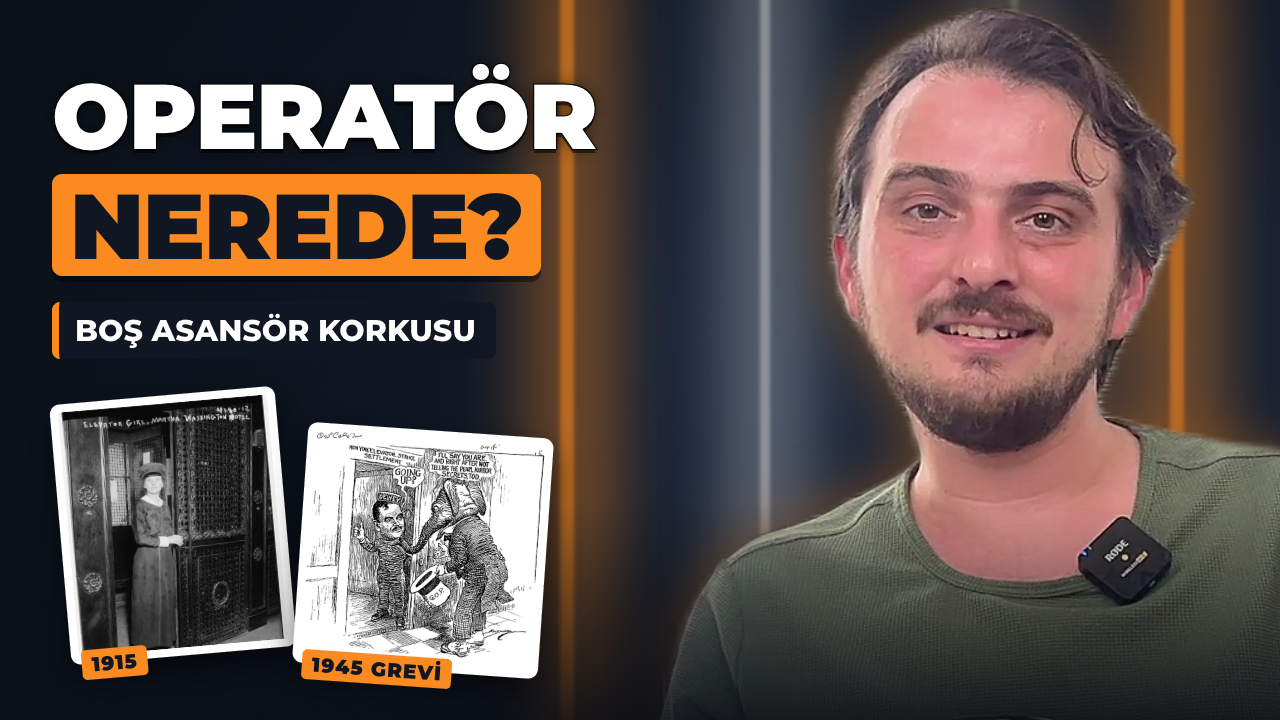
04 · Distribution
every copy links back to the source-
Original ↗
YouTube @Muhammed Furkan Yılmaz ·
-
Original ↗
YouTube @Muhammed Furkan Yılmaz ·
-
Original ↗
YouTube @Muhammed Furkan Yılmaz ·
-
Original ↗
YouTube @Muhammed Furkan Yılmaz ·
-
Original ↗
YouTube @Muhammed Furkan Yılmaz ·
-
Original ↗
YouTube @Muhammed Furkan Yılmaz ·
-
Original ↗
YouTube @Muhammed Furkan Yılmaz ·
-
Original ↗
YouTube @Muhammed Furkan Yılmaz ·
-
Original ↗
YouTube @Muhammed Furkan Yılmaz ·
-
Original ↗
YouTube @Muhammed Furkan Yılmaz ·
-
Original ↗
YouTube @Muhammed Furkan Yılmaz ·
-
Original ↗
YouTube @Muhammed Furkan Yılmaz ·
-
Original ↗
YouTube @Muhammed Furkan Yılmaz ·
-
Original ↗
YouTube @Muhammed Furkan Yılmaz ·
-
Original ↗
YouTube @Muhammed Furkan Yılmaz ·
-
Original ↗
YouTube @Muhammed Furkan Yılmaz ·
-
Original ↗
YouTube @Muhammed Furkan Yılmaz ·
-
Original ↗
YouTube @Muhammed Furkan Yılmaz ·
-
Original ↗
YouTube @Muhammed Furkan Yılmaz ·
0 views · 0 likes · 0 replies
evidence score = views + 10 · likes + 25 · (replies + reposts + shares) · threshold 10.000
05 · Links
- This idea extends We don't write code anymore, we manage it What happened to software developers will happen to all of us: when calculation moved to machines, human computers didn't vanish, they started running the machines; the same is happening to code, and what matters now is not writing it but explaining what you want, checking the result and taking responsibility. Testing
- This idea related Are interfaces going away? Software isn't dying, the interface is: Kodak didn't eliminate the darkroom, it made it someone else's job, and today the interface tax of screens, tabs and go-here-copy-paste is moving to AI the same way. Testing
Disagree? Weaken the thesis.
This idea has not been posted on Threads yet. When it is, replies land here and move the status.
---
thesis: The automatic elevator was ready, but people ref...
status: testing
topic: yapay-zeka-doneminde-biz-ne-yapacagiz
published: 2026-10-23
canonical: https://furkanmind.com/en/mind/ai-needs-a-red-button-first
---
The raw layer is closed to agents. Content is licensed CC BY 4.0. When quoting, cite the node URL.